
Making Space Between Our Thoughts and Our Self: Defusion Techniques To Help Lower The Distress of Anxiety
The dreaded anxiety thought spiral. An all-too-familiar feeling in which our anxious thoughts can begin to feel out of our control. In our usual, properly regulated state, we can easily make distinctions between what thoughts are useful or not useful. When we find ourselves experiencing anxiety—a feeling often conjoined with a dysregulated nervous system—distinguishing our thoughts from our knowing self can feel nearly impossible.
There are proven tools that help. The goal is to find space between our thoughts and sense of self. We’ll look over what fusion and defusion really is, how this knowledge can help us, and practical steps you can take to limit how the dreaded anxiety-spiral impacts your life.
What is Fusion?
Has it ever felt like your thoughts or feelings are so tightly wound with your sense of self, it’s hard to distinguish between what is true or not true? A thought I hear from clients often is “I am a failure.” Such a thought can feel as true or resonant as saying, “I have a heart beating in my chest.” Distinguishing and relating to these thoughts and subsequent feelings can be difficult.
If this struggle sounds familiar, then you’ve likely experienced a sense of fusion. This is a completely common and normal act. After all, our thoughts are produced in part by us, therefore it follows that we would engage with them as though they are indeed as connected to us as the fingers on our hands or toes on our feet.
Like anything, fusion alone doesn’t indicate a bad outcome or poor mental health. However, when unrecognized, or when fusion becomes an impediment, understanding this process can be incredibly useful in finding our way past thoughts and feelings that hold us back.
Fusion tells us that our thoughts are us, and we are our thoughts. However, we can easily debunk this theory. We can think, “I am an elephant,” and immediately recognize this not to be true. However, the thought has still been produced. Furthermore, our thoughts can be easily influenced or created by outside sources. For example, if I tell you, don’t think about an elephant, what are you now thinking about?
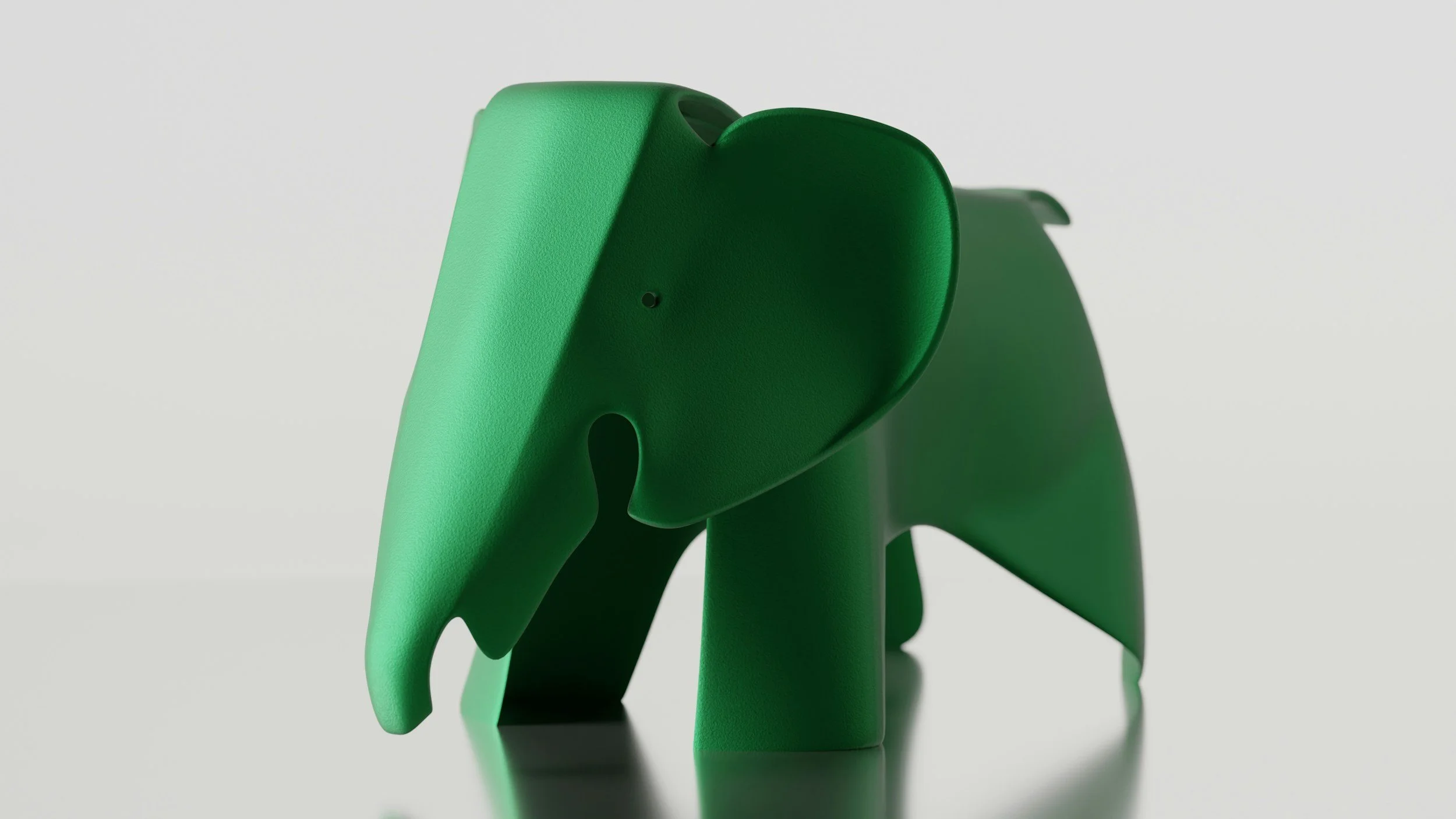
“When you try not to think of something, you do that by creating this verbal rule: ‘Don't think of x.’ That rule contains x, so it will tend to evoke x... If we check to see whether our efforts are working, we will remember what we are trying not to think and we will think it. The worrisome thought thus tends to grow.”
Dr. Steven C. Hayes
Fusion highlights an important point of emphasis for mental health. The more we try to control our thoughts, and the more we believe our thoughts to be facts and fused with our sense of self, the more confused, lost, and frustrated we become.
Don’t worry, there is a way through this!
What is Defusion?
It stands to reason that if fusion can be harmful, then an alternative helpful tool would be to de-fuse our thoughts and feelings from our sense of self. Not only is this possible, but it can be accomplished in many different ways.
Defusion is the space we make between our thoughts and our sense of self. By making space between ourselves and our cognition and emotions, we gift ourselves something inherently good for our health—choice! If we notice a thought such as “I am a failure,” rather than accept this as fact and truth of who I am, I can instead look at the thought (we’ll talk about how in just a moment) and choose how to relate to this thought. Is this thought helpful? Do I believe this thought to be true? Is there an alternative that may feel more resonant or helpful?
What if the thought is, “I am an elephant.” It’s likely easier to find some space and defuse from this thought. I can look at the thought. Accept the thought as existing. Relate to the thought by asking if this is true and helpful. It may feel easier in this way to see how our thoughts are easy to defuse from, when the thought isn’t as psychologically intense. However, the thought, “I am a failure,” and “I am an elephant” are indeed both thoughts and are created in the same way, exist in the same space and processes in our brain, and ultimately can be treated exactly the same even if they feel vastly different in their sentiment and impact.
Now let's try some exercises to put this to the test.
Implementing Defusion: Take Action and Recognize the Results
There are a multitude of ways to implement tactics to create defusion and increase agency in relation to our thoughts and feelings. These are just a few starting points to begin to feel the impact of defusion.
1) "I'm Noticing the Thought That..."
When a noticeably difficult and consistent thought arises, try reframing it by adding a simple adaptation to the phrase, for example:
Fused thought: "I'm going to mess this up."
Step 1 for Defusion: "I am having the thought that I'm going to mess this up."
Step 2 for Defusion: "I notice I am having the thought that I'm going to mess this up."
Why this works: This shift in languaging creates distance, reminding you that the thought is a process in your mind rather than an objective fact or reality.
2) Materializing the Thought
Objectifying the thought can be useful in finding space between you and your thoughts. By connecting the thought to a concrete physical form, it helps us notice the thought as an object outside of ourselves.
How to do it: Close your eyes and focus on a single thought. Then visualize the thought. Use these questions to help you make the thought into an object.
What shape is it?
What color?
How heavy is it?
Is it hot or cold?
Now imagine holding it in your hands or placing it on any surface you see in front of you.
Why it works: By focusing on a thought and conceptualizing it in a three-dimensional space, we turn on a part of our brain that helps us recognize the nebulousness of our thoughts. These are not facts that exist without our ability to recognize and change them. By giving them physical traits, we create a new relationship that allows us to recognize its true power and usefulness.
3) Make Music or Use Silly Voices
Simple vocal changes can strip away the perceived power of difficult and intense thoughts.
How to do it: Take any distressing thought (e.g., "I'm a failure") and repeat it out loud in a silly voice—like a cartoon character, a superhero villain, or a small child. Similarly, you can try to sing the thought to the tune of "Happy Birthday" or "Mary Had a Little Lamb.”
Why it works: We usually take negative self-talk very seriously—our brain is designed to focus on serious and negative thoughts and events to protect ourselves from harm. By altering the tone, tenor, or rhythm of the words, we render the thought less intimidating which allows us easier access to choose how to respond and relate to the thought.
The Practical Reasoning Defusion Works
We are relational people. Any time we talk about psychology, we are talking about relationships. This can be relationships with other people, with the world around us, and with our own thoughts and feelings.
Often we treat thoughts as facts, not a constant stream of often random and meaningless attempts by our brain to make sense of ourselves in the world. By creating an opportunity to relate to our thoughts, we engage the most effective parts of our evolved brains. When we can actively choose how to respond or not respond, we engage our sense of agency and control. Often this is what we crave in most of our struggles.

"Between stimulus and response there is a space. In that space is our power to choose our response. In our response lies our growth and our freedom." - Viktor Frankl
Just as we can choose to engage or not engage with the stray animal on the street who may be dangerous to our wellbeing, we can also choose to engage or not engage with our thoughts that may be dangerous to our mental health.
Give it a try! See what it feels like to choose to engage or not engage with your thoughts. What is your life like when you make space between thoughts such as “I am a failure,” “I am going to be disappointed,” and “I will never be okay.”
If you see this as a thought and choose not to let it be a fact but rather a thought and nothing more, do you feel any lighter? Anything you will do differently without the weight of that thought? If it helps to try this with a trusted, non-judgmental source, you can find time to connect with us here.
Tell us how it works for you!
